Laboratory efficiency begins long before a single test is run. Anasys delivers a fully orchestrated pre analytical ecosystem that turns chaotic specimen intake into a controlled, traceable, and error resistant workflow. By integrating automated sorting, centrifugation, and intelligent storage and retrieval, we address the primary source of diagnostic variability, the pre analytical phase, and protect the integrity of all specimens sent to Clinical Chemistry Analyzers, Immunoassay Systems, and Hematology Analyzers.
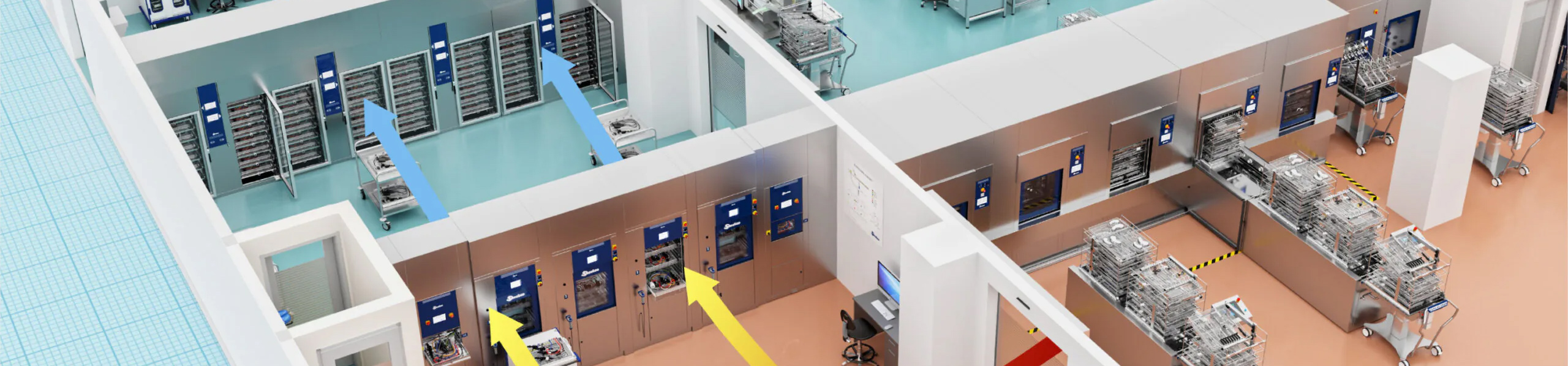
An automated receiving and sorting matrix handles mixed loads of Blood Collection Tubes and Urine Collection Containers arriving by courier or pneumatic tube. High speed barcode imagers and sensors validate container type, cap color, and sample volume against the Laboratory Information System. Specimens that fail acceptance criteria are diverted to an exception lane for manual review.
Rule based middleware prioritizes biohazard handling for Safety Needles and Lancets and routes specimens by urgency and destination, with STAT samples bypassing queues to reach Centrifuges or analytical tracks. Dynamic buffer lanes absorb intake surges, and integrated supply tracking links Tourniquets and Multi Sample Needles usage to actual draw volumes.
A parallel validation run confirms barcode read rates above 99 point 9 percent and accurate capture of IV Access and Blood Collection Sets lot numbers. Dashboards provide real time visibility of specimen location and status.
Technical Note: Barcode scanners must decode Code 128 and 2D Data Matrix with at least 5 mil aperture. Volume detection for evacuated tubes requires quarterly recalibration with manufacturer supplied reference tubes.
Specimens needing plasma or serum separation are routed to a refrigerated, high capacity Centrifuges array with rotors for pediatric and adult tubes. Spin protocols are temperature controlled at 4 C with validated RCF profiles and low braking ramps to protect gel barriers and minimize platelet activation for Coagulation Analyzers.
Software logs each cycle with rotor ID, duration, and temperature, and applies a digital timestamp to start stability countdowns. Liquid Biopsy Collection Systems follow a two step differential spin to prepare plasma for cell free DNA.
Automated load balancing scans bucket weight distribution and guides operators to keep rotor imbalance within 1 point 5 grams, extending motor life and reducing noise.
Technical Note: Coagulation specimens must yield plasma with platelet counts below 10,000 per microliter to avoid interference in lupus anticoagulant testing. Rotor buckets should be inspected monthly for cracks or corrosion.
An automated aliquoting module with Liquid Handling robotics aspirates precise volumes from primary tubes and dispenses into barcoded secondary tubes. Conductive disposable tips with liquid level sensing submerge only 2 mm below the meniscus to avoid disturbing cell layers.
Child order logic from the LIS drives creation of separate aliquots for Clinical Chemistry, Immunoassay, and ELISA platforms. The robot selects secondary tube types, prints and applies labels, caps tubes, and uses cameras to verify label placement and fill volume.
The aliquoting deck operates inside a HEPA filtered, negative pressure enclosure to capture aerosols during decapping and handling of Safety Needles and Lancets. Aliquot timestamps define stability windows for each test.
Technical Note: Conductive level sensing must be calibrated with a saline blank each shift. High protein samples may require a 2 mm aspiration height offset to prevent tip clogging.
An automated Temperature Control storage and retrieval unit provides 4 C robotic carousel storage for primary tubes and aliquots. The vertical carousel holds thousands of tubes, with redundant temperature probes and short term battery backup for cooling during brief power loss.
Middleware tracks dwell time against assay specific stability limits and flags specimens nearing expiry. When add on tests are ordered, the LIS queries the storage database, and the robotic gantry retrieves the exact tube by accession ID and delivers it via a pass through drawer, eliminating manual searches and misplacements.
Urine Collection Containers for Microbiology and Culture Systems are stored separately at ambient conditions with controlled humidity to protect preservatives. Dashboards show real time storage occupancy and alert when holding times are exceeded.
Technical Note: Carousel speed is limited to 2 point 0 meters per second to avoid gel barrier disruption. Vibration isolation pads are required, and floor vibration above 0 point 05 mm per second can degrade gripper accuracy over time.
A centralized exception management console aggregates all flagged specimens, including hemolysis, insufficient volume, wrong tube type, or mislabeling. Standardized workflows guide technologists through resolution, including recollection using appropriate Blood Collection Sets or Capillary Blood Collection Devices.
The console integrates with the electronic health record to send automated notifications to nursing units about rejected specimens, including reason and recollection time, shortening delays for critical tests such as STAT electrolytes or troponin.
Monthly pre analytical quality reports summarize rejection rates by unit and collector, time from collection to centrifugation, and the percentage of specimens affected by transport delays. These KPIs support accreditation compliance and continuous improvement to reduce pre analytical error rates.
Technical Note: Notification rules must protect patient privacy and send alerts only to authorized care team members. Monthly quality reports should be auto archived for at least two years to support inspections.
Subscribe to access specialized product classifications and tailored laboratory solutions. Enhance your operational efficiency with our systematic intelligence.
© Nortek HealthCare Group Ltd., 2009-2026. All rights reserved.
This site operates under the laws of the People's Republic of China. Your access and use constitute acceptance of these Terms of Use and our Privacy Policy. All content is governed by our Privacy Notice. For details or inquiries, please Contact Us or use the site's search function.