Anasys’s innovation model does not chase exotic new modalities. Instead, it makes existing diagnostic technologies more reliable, easier to use, and more accurate for patients. The focus is the 95 % of routine testing — making that routine consistently excellent.
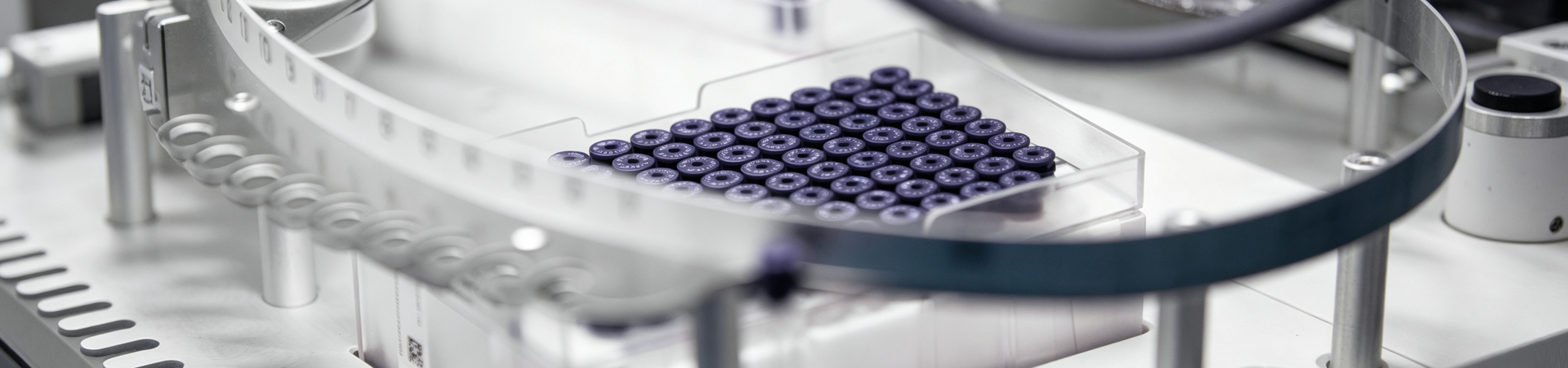
Since 2009, R&D has been oriented toward highly dependable diagnostic systems, grounded in direct observation of laboratory workflows, common failure modes, and the evolving needs of technologists and pathologists. No invention for its own sake. Disciplined innovation: select the right technology — mature or emerging — and implement it with rigorous, evidencebased validation.
Today, innovation lives in a collaborative ecosystem: product definition, quality assurance, application support managed by Anasys; precision assembly and integration carried out by a select network of worldclass production centers. This model — intelligent specialization — enables remarkable agility: responsive service, flexible distribution, short feedback loops from users to engineering. Technical coordination is centralized in Shenzhen, with partnerships extending across China’s most advanced diagnostic production bases.
A significant portion of Anasys’s talent is dedicated to product development, quality engineering, and clinical validation — optical calibration, reagent stability studies, software usability, humancentered workflow design. Close collaboration with hospital laboratories, academic diagnostic centers, and independent testing organizations.
Every project begins with a clinical question: what do laboratory professionals actually need? We prioritize problems that matter in real laboratories — turnaround time, sample volume constraints, cost per reportable result — not features that look good on a datasheet but are rarely used. Clinical relevance is the filter through which all innovation passes.
Reliability is not tested in at the end — it is designed in from the start. Our engineers apply failure mode and effects analysis (FMEA) to every new instrument and reagent. We specify components with appropriate tolerances, design for serviceability, and build in redundancy where failure is not an option (e.g., optical detection paths, temperature control loops). Quality by design means we anticipate failure and engineer it out before production.
A diagnostic instrument is only as good as its usability under realworld pressures: understaffed night shifts, highvolume morning rushes, staff turnover. We design interfaces that reduce cognitive load: unambiguous icons, logical menu hierarchies, errorprevention prompts, and visual feedback for every critical action. Our reagent packaging is colorcoded by test menu; our consumables are designed for intuitive loading. Simplicity is not a luxury — it is a safety feature.
No aggressive smoothing or normalization that hides outliers or masks imprecision. Our algorithms present what is actually measured — because a physician’s diagnosis depends on true values, not manipulated curves. Result honesty also means no calibration drift compensation that silently degrades lowend linearity. If a protocol improves throughput, the tradeoff is documented clearly.
Subscribe to access specialized product classifications and tailored laboratory solutions. Enhance your operational efficiency with our systematic intelligence.
© Nortek HealthCare Group Ltd., 2009-2026. All rights reserved.
This site operates under the laws of the People's Republic of China. Your access and use constitute acceptance of these Terms of Use and our Privacy Policy. All content is governed by our Privacy Notice. For details or inquiries, please Contact Us or use the site's search function.