The transfusion medicine service operates under strict safety and documentation requirements. Anasys provides an integrated solution that automates blood grouping, antibody screening, compatibility testing, and blood product inventory management. By combining Immunoassay Systems for blood typing with Coagulation Analyzers for transfusion reaction workups, we create a secure, closed loop workflow that minimizes hemolytic transfusion risk and ensures the correct component is issued at the correct time. The solution also includes Blood Typing Kits for emergencies and Temperature Control Blood Bank Refrigerators and Freezers for storage.
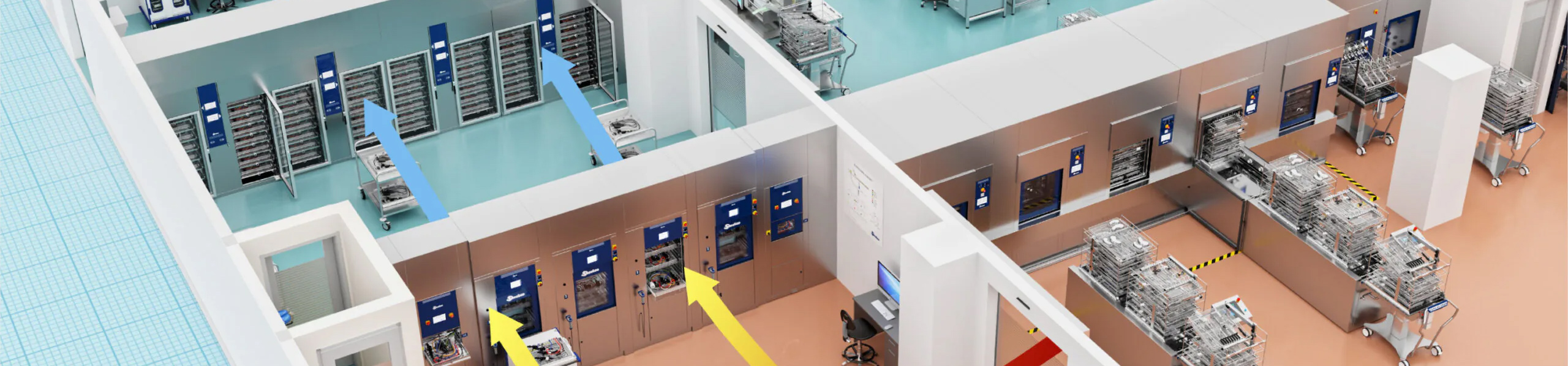
An automated immunohematology analyzer performs ABO and Rh typing and antibody screening using gel cards or solid phase assays. Immunoassay Reagents include anti A, anti B, anti D, and a three cell screening panel.
The robotic pipettor performs forward and reverse grouping and flags discrepancies for manual review. Antibody screening uses an indirect antiglobulin test, grading reactions from 0 to 4 plus. A positive screen triggers an 11 cell identification panel to determine antibody specificity.
Technical Note: The gel card centrifuge must be balanced. Speed and time should be verified monthly. Samples with a positive DAT may show false positive reverse grouping and must be flagged.
After a valid type and screen, the Blood Bank Information System selects compatible red cell units. Refrigerators and freezers are monitored continuously, and each unit is barcoded with donation number, type, and expiration.
For patients without antibodies, an electronic crossmatch verifies ABO and Rh compatibility and matches current and historical types. This completes in seconds.
For patients with antibodies, a serologic crossmatch is performed using donor red cells and patient plasma. Only compatible units are reserved.
Technical Note: The electronic crossmatch algorithm must be validated for all donor recipient combinations. The system must prevent issuing Rh positive units to Rh negative females of childbearing age unless overridden by a physician.
Blood bank refrigerators and freezers record temperature every 15 minutes using probes in glycol bottles. Alerts are sent if temperatures fall outside required ranges.
The inventory module tracks units from receipt to issue, including special attributes such as CMV negative or irradiated. Units nearing expiration are flagged to support FIFO rotation.
At issue, both the unit barcode and patient wristband barcode are scanned for a final safety check. Returned units are evaluated for re entry or discard based on time outside controlled storage.
Technical Note: Refrigerators require dedicated power and UPS. Temperature alarms must be tested monthly using a warm water bottle.
Coagulation Analyzers and Immunoassay Systems support transfusion reaction workups. The BBIS guides technologists through clerical checks and testing steps.
A Direct Antiglobulin Test detects IgG or C3d coating red cells. Positive DAT results trigger an elution procedure to identify the antibody responsible. Findings are compiled into a reaction report reviewed by the Transfusion Medicine Director and submitted to oversight committees.
Technical Note: Red cells must be washed thoroughly before DAT. Washer dispense and aspiration volumes must be verified monthly.
The BBIS includes a Massive Transfusion Protocol pathway. When activated, the system prints an MTP pack pick list and identifies units based on inventory and FIFO rules.
Emergency release of uncrossmatched blood is supported with Blood Typing Kits and Capillary Blood Collection Devices. The system manages the release of Group O units with clear disclaimers.
A mobile scanner tracks units transfused at the bedside, giving real time visibility to the blood bank and enabling proactive preparation of additional components.
Technical Note: MTP drills should be performed quarterly. Emergency release requires a second person to verify ABO and Rh before issue.
Subscribe to access specialized product classifications and tailored laboratory solutions. Enhance your operational efficiency with our systematic intelligence.
© Nortek HealthCare Group Ltd., 2009-2026. All rights reserved.
This site operates under the laws of the People's Republic of China. Your access and use constitute acceptance of these Terms of Use and our Privacy Policy. All content is governed by our Privacy Notice. For details or inquiries, please Contact Us or use the site's search function.